
At the most basic level, “liturgy” (from the Greek λειτουργία) simply refers to any public service. Its more common and acquired Christian connotation, however, is the structure or orderly pattern of public worship. The purpose of liturgy is to ensure that the church accords with the apostolic directive that everything in its assembly should edify and be done “decently and in order” (1 Cor. 14:26, 40); in other words, that the service both builds up the saints and reflects the orderliness appropriate to God’s worship. A well-structured liturgy helps achieve this by providing a theologicallyinformed pattern through which the gospel is repeatedly ministered to the congregation.
Being built up in the truths of the gospel
This is reflected in the historic Latin maxim “lex orandi, lex credendi, lex vivendi” , which simply means that the way the church worships shapes what the church believes, and what the church believes shapes how the church lives. Week by week, month by month, and year by year, the structure and content of worship quietly form the faith and life of God’s people. As believers confess their sins together, hear the assurance of God’s mercy in Christ, praise the Lord in song, listen to the reading and preaching of God’s word, confess their common faith in the creeds, pray the Lord’s Prayer, intercede for others, receive the sacraments, and depart with God’s blessing, they are steadily built up in the truths of the gospel and encouraged to live in light of them.
Thomas Cranmer and his fellow English reformers recognised the formative power of worship, which is why they devoted careful attention to shaping the church’s liturgy in the Book of Common Prayer. Their aim was to ensure that the church’s public worship would be saturated with Scripture, grounded in sound doctrine, shared actively by the whole congregation, expressed with clarity and simplicity, and attentive to prayer for the needs of the church and the world. A theologically well-ordered liturgy is therefore a vital means by which the church’s faith is nourished and its life directed.
Sustained moments of stillness before God
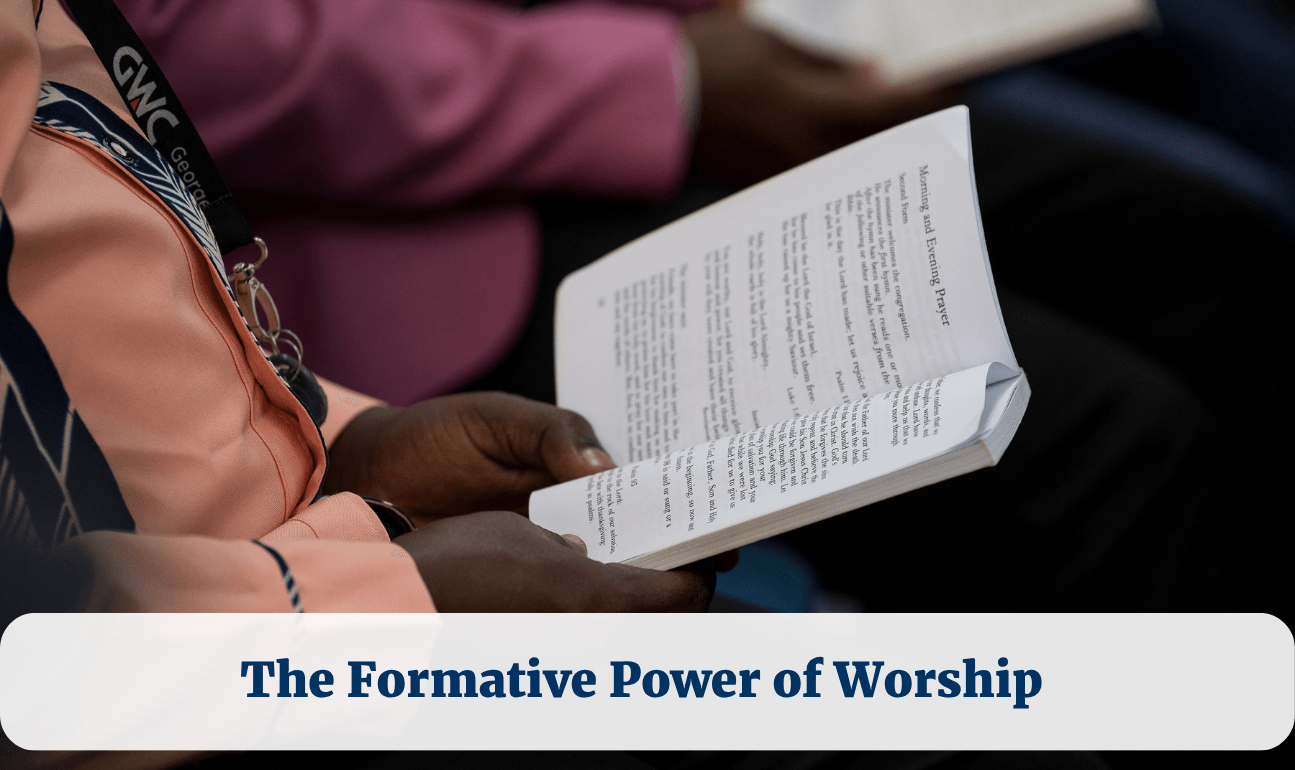
Our new Monday chapel service follows the Morning Prayer liturgy from the REACH-SA Prayer Book in its entirety. It is deliberately quieter and more reflective: there is no singing, no sermon, and no electronic screens. Students are encouraged simply to listen as the three Scripture readings are read aloud, rather than following along in their own Bibles. After the readings, a few minutes of silence are kept so that students may personally reflect on the Word they have heard and respond to it in prayer. In a culture marked by constant noise, digital distraction, and relentless activity, many Christians rarely experience sustained moments of stillness before God. The Monday chapel service is therefore intended to cultivate habits of attentive listening to God’s Word, reflective prayer, and reverent participation in liturgical worship.
The prayer book’s rhythms of Scripture reading, confession, prayer, and congregational responses reflect a liturgical heritage shaped over centuries. Engaging with this tradition helps students see themselves not only as part of the contemporary church in Africa, but also as participants in the wider Anglican world across time and place. In this way, our chapel services aim to hold together two important realities: being rooted in the African context in which we minister, while also drawing on our deep and formative Anglican liturgical heritage.
Our new Monday chapel services help students experience the formative value of a set liturgy, preserving and drawing upon the historic treasures of the reformed faith, while also situating our worship within the broader life of African Anglicism

By Dr Jake Griesel